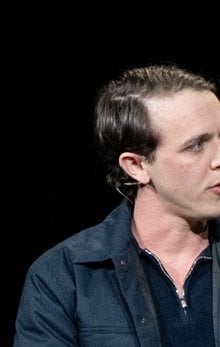
Why Bolt's CEO Bets on AI Over HR in Company-Wide Reset

What happens when a company eliminates its entire HR function?
According to Ryan Breslow, CEO of fintech firm Bolt, it can make problems “disappear”.
Speaking at Fortune’s Workforce Innovation Summit, Ryan said the company chose to cut its HR department as part of a broader push to return to a more agile, startup-style operating model.
“We had an HR team, and that HR team was creating problems that didn’t exist,” he said. “Those problems disappeared when I let them go.”
Instead of a traditional HR function, Ryan said the company has introduced a smaller “people operations” team.
He described the shift as “more focused on efficiency, less focused on fluff”.

A return to startup culture
Ryan has been making sweeping changes to how the company operates since returning as CEO.
Having first founded the business in 2014 while a student at Stanford University, he led it through rapid growth before stepping down as CEO of Bolt in 2022.
He returned to the role in March 2025, following a 97% drop in valuation from its US$11bn peak. To reignite growth, Ryan says he is now operating in “wartime.”
“We’re back in startup mode again, and those HR professionals have really important insights when you’re in a peacetime and when you’re at a larger company,” he told attendees at the Workforce Innovation Summit.
Operating outside of “peacetime,” he added, requires a leaner organisation — a shift he says many employees struggled to adapt to upon his return.
“They had gotten used to working at a company where they didn’t have to get their hands dirty, and could spend a lot of money, and we just didn’t have that money to spend anymore, and we didn’t have that luxury,” he says.
According to Ryan, employees were given 60 days to adjust to a more agile model, with those unable to adapt let go.
“There’s a sense of entitlement that had festered across the company, and people who felt empowered, felt entitled – but weren’t actually working hard," he says.
“And this is the number one thing that I had to battle. Ultimately, most of those people just had to be let go.”
Layoffs at Bolt
The decision to cut Bolt’s HR team forms part of a wider transformation effort.
In April, the company revealed it was laying off around a third of its employees as it looks to reshape itself into a leaner, startup-style organisation.
Addressing staff on Slack, Ryan described the redundancies as “unavoidable”.
“Going forward, Bolt will be operating as a much leaner organisation and leveraging AI at our core" he said.
“Developing products and operating in 2026 is very different than it was in prior years and we need to adapt as an organisation to be leaner and more AI-centric than ever to keep up with competition.”
This is not the first time Bolt has reduced its workforce.
The company cut around 250 roles in 2022 during a period of restructuring, followed by a further 10% reduction in January 2023 and additional layoffs in December that year – bringing total headcount down by more than half since May 2022.
Company portals

Executives
Ryan Breslow
Founder & CEO